Describe the date and concern
Give the date if known and explain what changed. If several storms are possible, say so rather than guess.
Cleburne, TX
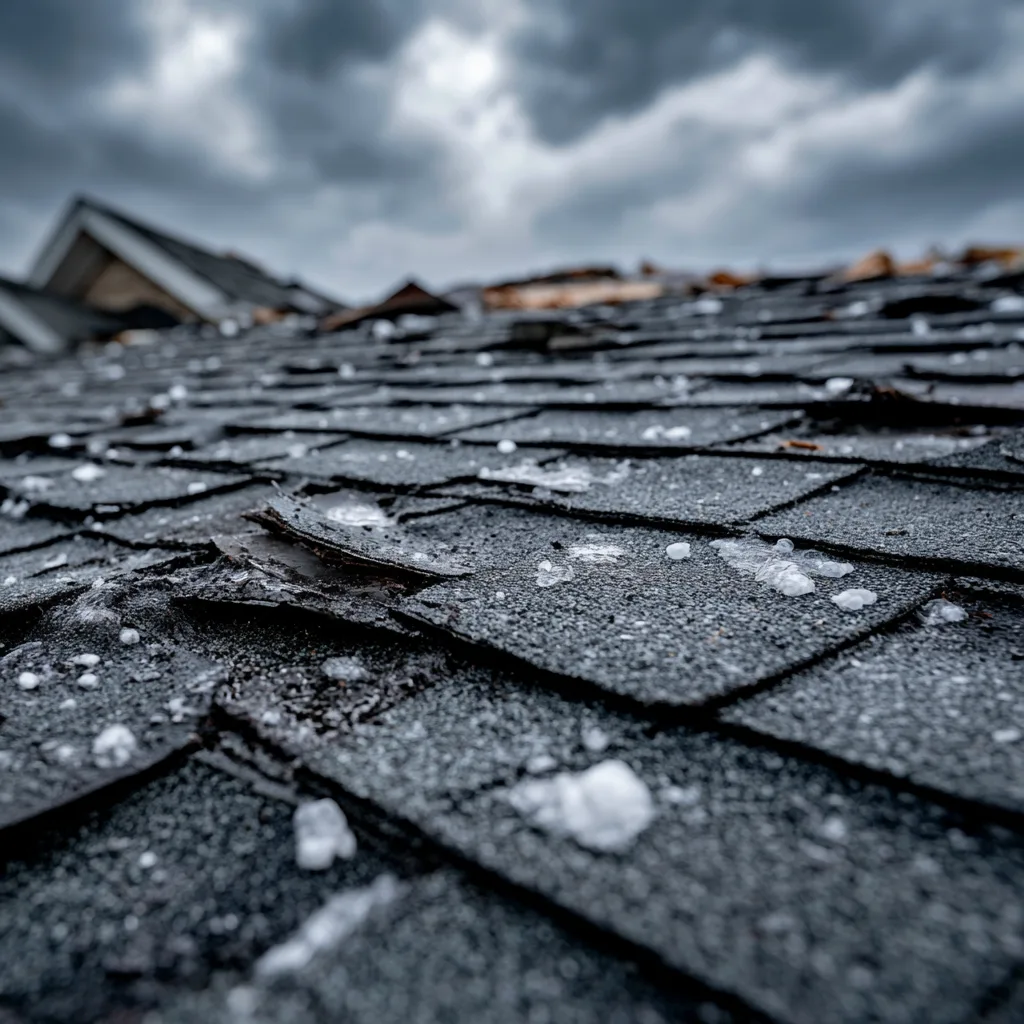
Hail can damage a covering before water appears indoors. Describe what changed and request a free inspection of the roof.
After the storm
NOAA records 4.5-inch hail at Cleburne Municipal Airport on April 28, 2026. That is a recorded observation near town, not a measurement of what struck your house.
If hail passed through and you cannot tell whether the covering was damaged, a free inspection is a useful starting point. Our roofer can examine the shingles and the details the ground cannot show.
The storm record retains the reported locations and source IDs.
Hail can dislodge granules or damage the shingle beneath them. The size and shape of a mark do not establish the entire condition of the roof or decide insurance coverage.
The mineral surface protects the asphalt below it. Concentrated loss needs to be examined alongside the mat, surrounding wear and other evidence.
Impact can damage the shingle mat beneath a surface that appears mostly intact. A roofer assesses the material rather than ask you to test it from a ladder.
Cracks, splits or missing parts may compromise the covering. Their extent helps determine the repair scope.
Some marks change appearance while others affect function. The policy’s definitions and exclusions still determine how an insurer treats the loss.
A storm report does not establish a damage threshold for your product. The claim guide explains the separate coverage decision.
How the visit goes
The roof assessment should identify what happened to the material and how much work is appropriate. Any documentation needed for insurance is a requirement to discuss with the roofer and carrier.
Give the date if known and explain what changed. If several storms are possible, say so rather than guess.
Our roofer can assess shingles, metal and intersections for damage, with safety and access determining the method.
A useful scope identifies the damaged areas and how the repair addresses them. Concealed work should have clear terms.
The insurer decides coverage under the policy. Ask what roof documentation is available and what the carrier needs.
Look from safe ground-level locations. Dented metal, damaged screens or debris may help establish that the property needs a closer assessment, but they do not prove the roof has failed.
Round dents and dimples along the gutter run and down the faces of the downspouts.
Coarse black grit where a downspout empties, or banked up in the mulch under the eaves.
Dinged vent caps, turbine housings, valley metal and the chimney cap, since soft metal takes a mark a shingle can hide.
Torn or pocked window and door screens on the side the storm came in from.
Fresh spatter marks on the garage door, the siding, the mailbox and anything painted, where a stone knocked the weathering off.
Damage to outdoor equipment that can be photographed safely and described alongside the roof concern.
Do not climb onto the roof to press shingles or verify impact marks. The roofer assesses the material.
Planning ranges
One slope, several penetrations and a roof-wide replacement are different jobs. The scope needs to establish the extent before a total is useful.
If replacement is appropriate, the cost guide shows regional installed planning bands. Those rates do not price an individual storm repair or predict an insurance settlement.
How much of the roof carries damage, since one bruised slope and a bruised field are different jobs.
What the deck looks like once the old covering is off, because soft or delaminated boards get replaced by the sheet.
Pitch and access, since a steep roof and a tight lot both slow the work down and both show up in the price.
The material you land on, from architectural asphalt up to impact rated class four.
The retained NOAA archive contains reported hail and thunderstorm-wind start points within 15 miles of central Cleburne, in Johnson County, for 2022 through the available 2026 records.
A record identifies a reported place and date. It is not a map of every part of the storm’s path.
Several reports can describe observations from one storm day. Counting reports does not count storms at your house.
NOAA publication lag and revisions apply. The 2026 portion is incomplete.
The material and its actual condition determine the roofing question. No nearby event proves damage at a property.
Browse the dated records with their NOAA source links.
That depends on the actual damage, deductible and policy terms. A roof assessment and a priced scope can help you understand the work; the insurer decides whether a loss is covered and what is payable.
Damage may exist before water appears inside. If hail reached the property or you see a change in the covering or surrounding metal, an inspection can help establish what needs attention. A lack of leaks alone does not settle the condition.
Take time to identify the contracting company and compare its proposal before signing. TDI states that contractors cannot waive your insurance deductible or help you avoid paying it. Do not postpone urgent temporary protection simply to compare sales offers.
Photograph safely visible damage, keep receipts for temporary protection and follow the policy’s reporting requirements. Ask your insurer about permanent repairs and inspection needs. Stay off the roof and keep people away from unsafe interior areas.
An impact rating is not a promise of hail coverage. Read the exact product terms and policy separately. Some products do offer limited wind coverage, so a blanket statement that no warranty covers weather would be wrong. The warranty guide explains what to check.
Cleburne Select Roofing
Tell us what you noticed after the weather and the date if known. Our roofer can inspect the roof and discuss the work its condition calls for.
(817) 774-9404