Measure the roof and existing run
Size the system for the area feeding it and examine the existing slope and outlets.
Cleburne, TX
Water coming over the gutter edge can start with debris, slope, outlet capacity or size. A look at the whole run helps locate the problem.
The finish of the roof
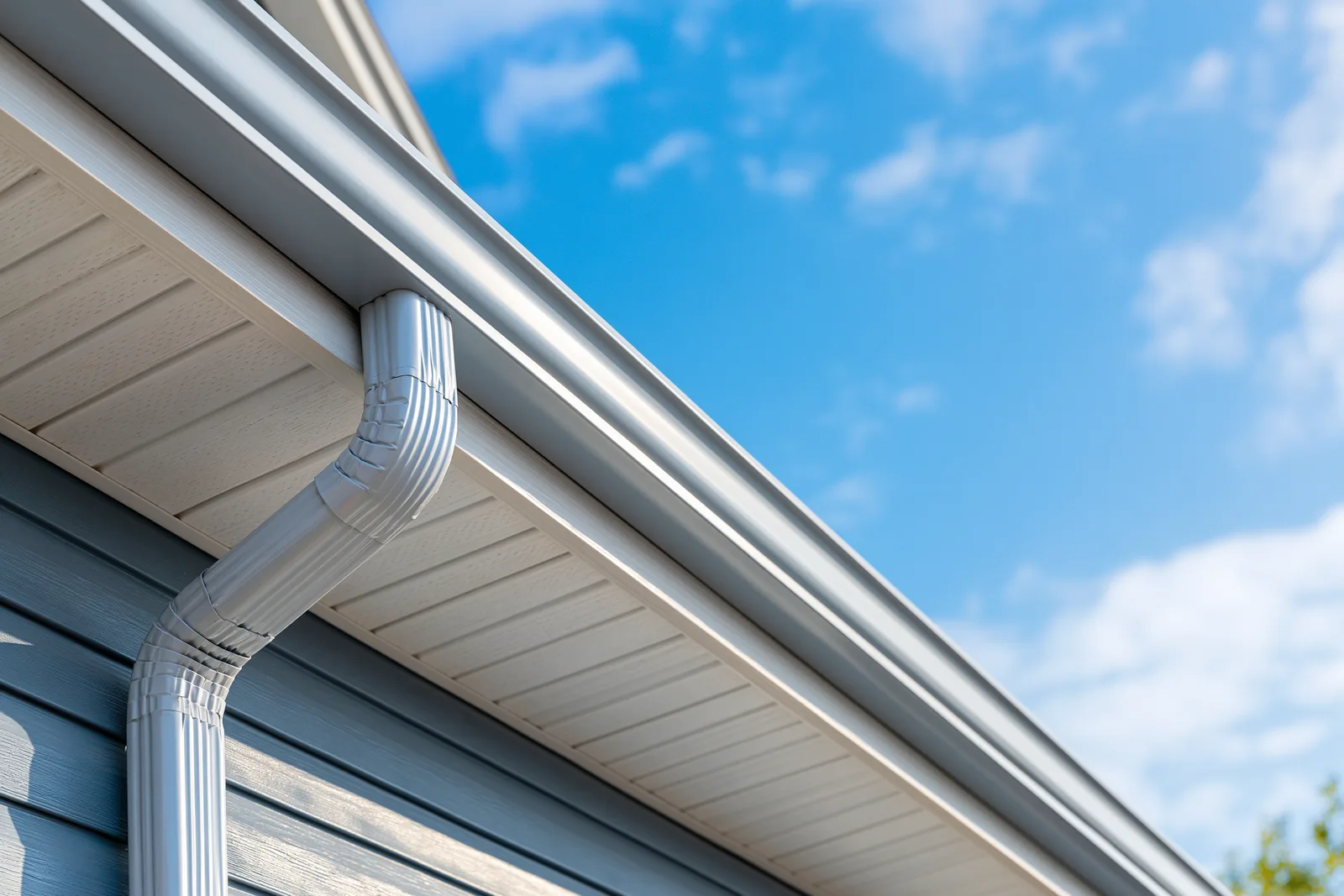
Most people file gutters under trim, somewhere near shutters and paint. They're closer to the last part of the roof than that. Shingles carry water down to the edge and hand it off, and what's hanging there decides whether it lands in a downspout or against the house.
Repeated overflow can keep fascia and nearby soil wet. The repair needs to address why the water is leaving the run, and any damaged support needs attention before new guttering is attached.
Two gutter quotes can carry the same number and describe different work. The difference usually sits in four places, and here's what they are.
Five- and six-inch profiles are common options. Roof area, pitch, local rainfall design and outlet layout determine the capacity needed.
Hidden hangers screwed through into sound fascia hold a loaded run; nails driven into soft wood don't. The spacing a quote assumes, and whether any board is getting replaced first, belongs on the estimate.
Outlet size, count and position affect how quickly water leaves the gutter. The discharge path should move it away from vulnerable building areas without sending it onto neighboring property.
Slope and unobstructed outlets work together to empty the run. Standing water calls for a check of both; sealed outlet connections keep discharge on its intended path.
Ask which installation and product terms are offered, who issues them and what maintenance or exclusions apply.
How the day runs
The roof edge, support and outlets need to work together. The contractor’s scope should explain the sections being repaired or replaced.
Size the system for the area feeding it and examine the existing slope and outlets.
Hangers need sound support. Damaged fascia is a separate part of the work to identify.
The chosen material and profile determine how lengths, corners and joints are made.
The completed run needs an unobstructed path to the outlets and a suitable place for downspout water to go.
From the driveway
These observations narrow the search. None proves that the entire run must be replaced.
Water over the front edge can indicate debris, an outlet restriction, incorrect slope or insufficient capacity.
Dark streaks below the lip are worth examining with the run’s condition; staining alone does not diagnose its capacity.
A dip can involve loose hangers, damaged backing or the run itself. The support needs checking before a replacement gutter is attached.
A washed channel or repeated pooling shows where discharge needs attention. The outlet location and drainage path both matter.
Stains or lifting paint on the fascia: peeling, bubbling or a dark band under the gutter line is the wood saying it's been wet over and over.
Water remaining in a run after rain calls for a check of slope, obstructions and outlets.
Dents can be part of a storm assessment, alongside the roof and other exposed surfaces. The hail and wind guide explains what those observations can and cannot establish.
Reading a per foot number
Gutter work prices by the linear foot, which is fair and easy to misread. The same foot costs differently depending on the material, the profile, how tightly the hangers sit, how many downspouts the plan carries and how high the run is.
So a lower number per foot can be a plan with fewer drops. The figure worth pinning down is the total, against a counted number of feet and drops.
For the larger replacement project, the roof cost guide explains the separate roof-area calculation. Gutter work needs its own measured run and outlet scope.
See where the roof number comes fromAluminum, steel and copper differ in material cost, durability and compatibility with adjoining metals.
The profile, roof area feeding it, outlet arrangement and local rainfall requirements determine the capacity needed. Compare the specified size and the reasoning behind it.
Downspout count and size change both capacity and installation work. Compare the total system, not just its price per foot.
Height and access: a second story run above a slope takes longer to hang safely than a single story eave, and that time's in the foot.
A gutter can empty correctly and still discharge beside a vulnerable wall or foundation. The last few feet of the water path matter.
A clear gutter needs outlets that can carry the water leaving the roof.
The attachment has to carry a loaded run on sound material.
A discharge point should suit the grading and avoid concentrating water at the building or across a property boundary.
When roof work is already planned, examine how drip edge, fascia and the existing gutters fit together.
Some can stay, while others need adjustment or replacement because of their condition or the planned edge detail. Have the proposal say which parts are included.
They can reduce some debris entering a gutter, but they still need inspection and maintenance. The right choice depends on nearby debris, roof layout and how the product can be serviced.
Size the run for the roof area feeding it, rainfall design and outlet arrangement. A larger trough cannot fix every problem caused by blocked or poorly placed outlets.
A loose hanger, joint or isolated section can suit repair when the rest remains serviceable. Water entering at the roof itself may call for roof repair as well.
Yes. Discuss both at the measurement stage so the contractor can identify shared setup and the proper sequence at the roof edge. Whether combining the work saves money depends on the actual scope.
Cleburne Select Roofing
Tell us where water spills or collects and whether roof work is also planned. The roofer can assess the roof edge and the guttering that serves it.
(817) 774-9404