Step one
The attic side, where it can be reached
Damp sheathing, a stained rafter or daylight at an unintended opening can help locate the path where access is safe and permitted.
Cleburne, TX
A ceiling stain shows where water emerged. Roof leak repair starts by tracing where it entered.
Following the water
Rain can enter at flashing, a pipe boot or a valley, then travel along decking or framing before reaching the ceiling. The visible mark may be the end of that path.
Our roofer can investigate the source rather than assume the roof directly above the stain is the part to patch. If attic access is useful, arrange it before the visit.
Connections at walls, pipes and intersecting slopes are useful places to investigate. The roof covering also needs examination. The roofer follows the evidence from the symptom to the possible entry points.
The woven metal where a slope runs into a wall or a chimney. When a piece works loose or the top edge pulls out of the mortar, rain walks straight behind it and onto the decking.
A split or poorly sealed pipe collar can admit water around the penetration. Its condition needs checking alongside the adjoining shingles and underlayment.
A valley collects runoff from adjoining slopes. A misplaced fastener, damaged lining or faulty connection can interrupt that drainage path.
A nail that's backed out lifts the shingle above it and opens a hole in the deck underneath. A satellite mount or a vent that came off years ago leaves the same thing behind.
Dormers and changes in roof direction create connections that need suitable detailing. A fault at one of those connections can become an entry point.
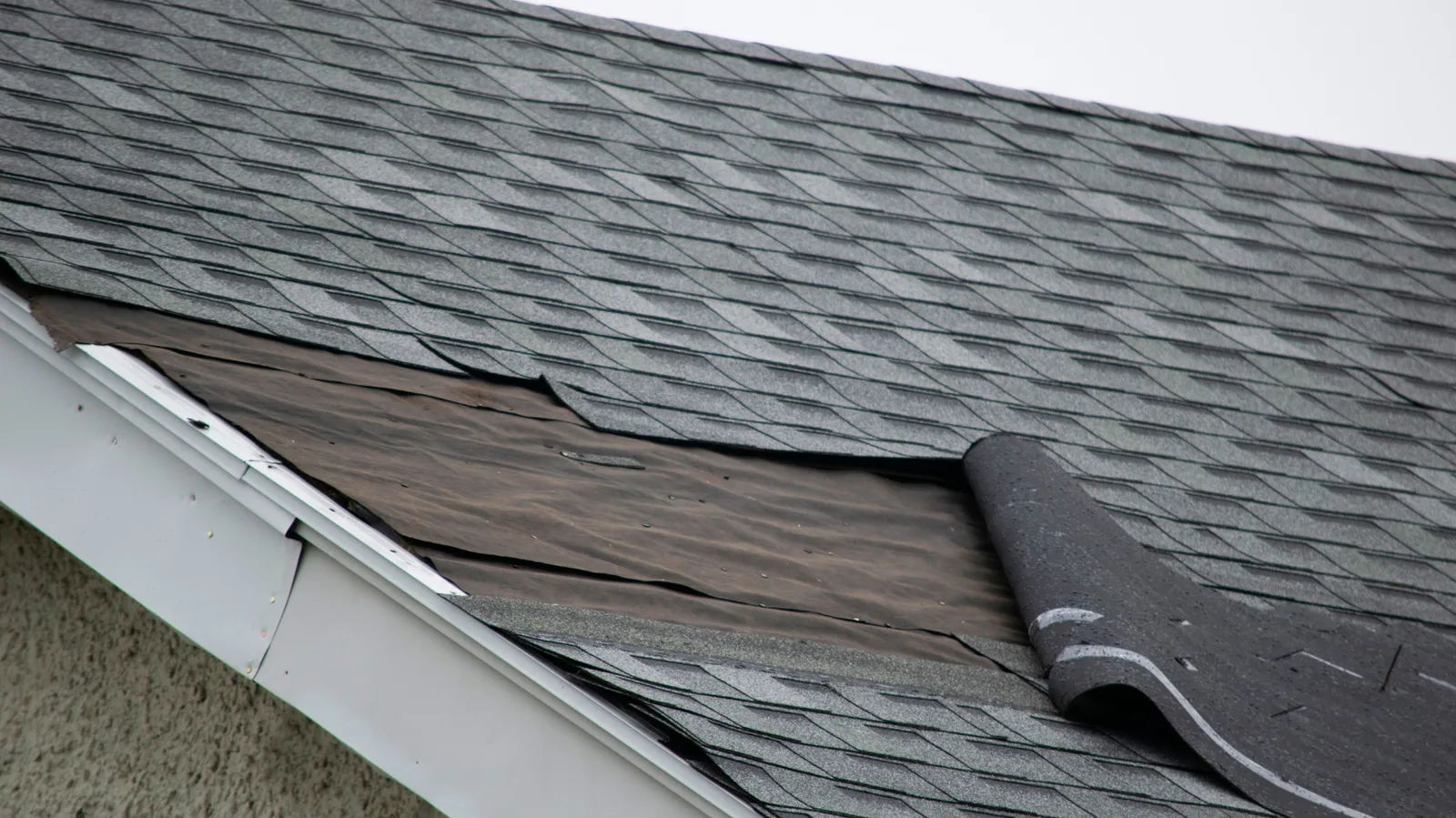
Cracked, missing or deteriorated covering can admit water. Its overall condition helps determine whether local repair is appropriate.
A leak on a flat or low-slope section, and a covering that's reached the end of its life, are different jobs from tracing one entry point; those sit with roof repair. If yours showed up right after a storm, hail and wind damage is where the claim side is written out. Water spilling over the front edge of the roof in every hard rain points at the gutter run instead.
Working backwards
Accessible interior evidence and the roof surface can narrow the search. A wider roof inspection can help when several parts are in question.
Step one
Damp sheathing, a stained rafter or daylight at an unintended opening can help locate the path where access is safe and permitted.
Step two
The roofer examines the covering and nearby intersections connected to the affected area. Visible surface damage and hidden transitions can need different investigations.
Step three
A controlled water test can help isolate some leaks when the first examination does not resolve them. The roofer should determine whether it is suitable and how to prevent additional interior damage.
A ceiling ring, a stain that returns with rain, blistered paint or a musty smell gives the roofer a place to begin. The visible mark may be some distance from the entry point. You do not need to find the opening before asking for help.
Describe where the mark is and whether its size or color has changed.
Note whether it appears with wind-driven rain, prolonged rain or every shower. That timing helps the investigation.
Tell the roofer if the damp area keeps growing after rain stops. Moisture can remain within the assembly.
Blistering paint or a damp wall can have several causes. Report the location without assuming the entry point.
Mention a persistent smell even when there is no visible stain. Moisture may need further investigation.
While it's still raining, everything you do is at ground level: put a bucket under the drip, move what's under it, and photograph the stain with the date on it. Nobody goes onto a wet roof, and a tarp isn't worth a ladder in weather. One condition changes the advice: a bulging, sagging or dripping ceiling section means keeping people and pets out of that room, and letting the roofer or a remediation pro handle relief from a safe footing.
The tracing line
The investigation and the repair can involve different work. Ask what diagnostic work is included and what happens if the cause remains uncertain.
An isolated fault on a sound covering may suit a local repair. Several independent leaks or a deteriorated field need a broader comparison. Repeating a patch without understanding the path can leave the original problem in place.
If the covering needs wider work, the replacement cost guide explains the regional planning ranges. It is not a leak-repair price list.
See where a repair number comes fromA split collar can be a contained repair when nearby layers are sound.
Step-flashing work can involve lifting adjoining shingles and examining the wall connection. The access and affected length change the scope.
A valley carries water from adjoining slopes. Repair may involve more surrounding material than the visible defect suggests.
Loose fasteners or abandoned holes need repairs compatible with the surrounding covering.
A slope that's reached the end: at that point the question stops being the leak and starts being the covering.
What the rain found
A change in wind direction or a longer period of rain can expose an entry point that stayed unnoticed before. That pattern helps the roofer investigate; it does not prove when the opening formed.
Wind-driven rain can reach a joint differently from a calm shower.
A restriction or low area may become apparent only after water has accumulated.
Explain when the stain changes and any earlier repairs. Those details can help trace the problem without guessing a cause from the calendar.
Water near electrical fixtures, a sagging ceiling or unsafe conditions call for keeping people away and getting appropriate urgent help. A new leak also deserves prompt assessment before more water reaches the building.
The amount can change with rain and the water path. From a safe location, protect belongings where possible and report the active leak. Do not enter an unsafe room or climb onto a wet roof.
The cause and surrounding condition decide. The size of the ceiling stain alone does not. Repair or replacement becomes the comparison when multiple faults affect a worn covering.
Read any workmanship and product coverage offered for the specific repair. Coverage for one repaired detail does not automatically cover the rest of the roof. The warranty guide explains that boundary.
Cleburne Select Roofing
Tell us where the water appears and when it changes. Our roofer can investigate the roof and discuss the repair needed to address the cause.
(817) 774-9404