Roof Age and Insurance in Cleburne, TX: What Covers a 20-Year-Old Roof
A twenty-year-old roof raises two different insurance questions: whether a loss is covered and how a covered loss would be valued. The answers come from the current policy, including its roof endorsements, and the condition of the roof.
Start with the age of the covering
The house’s construction date is not the roof’s installation date. A reroofing invoice, permit record or seller disclosure may help establish when the present covering went on. A repair invoice can explain a newer patch on an older field.
If the date is uncertain, tell the roofer and your insurer that. A visual assessment can describe condition without turning an estimate of age into a documented installation year.
Age and weather can affect the same covering. A nearby hail report does not establish damage at the house; the storm guide explains what the record can and cannot show.
Replacement cost and actual cash value pay differently
Actual cash value subtracts depreciation from replacement cost. Replacement-cost coverage can pay more toward the covered work, subject to the deductible, limits and the policy’s conditions. That difference can be substantial on an older roof.
The Texas Department of Insurance explains that some replacement-cost claims are paid in stages. An initial payment is followed by the amount due under the policy after the repair requirements are met. Ask the carrier which documents and deadlines apply to your loss.
Recoverable depreciation is the portion that may be paid later under replacement-cost terms. It should not be assumed on an actual-cash-value settlement, and it is not a promise that every cost of a new roof will be paid.
A roof payment schedule or other endorsement can change the calculation. Read those provisions with the declarations page rather than rely on how the dwelling coverage is described in a renewal summary.
Check what changed at renewal
TDI notes that some insurers move older roofs to actual cash value, and poor condition can affect whether the roof is covered at all. Roof age can therefore affect more than the size of a check.
Look for a roof settlement provision, payment schedule or changed deductible. Ask the agent how the current wording applies to the covering you have, particularly if you recently replaced it.
A percentage wind-and-hail deductible is generally calculated against the insured dwelling amount stated by the policy, not the size of the roof bill. The claim guide explains how to read that difference.
Where your own answer is written down
The declarations page lists coverages and deductibles; endorsements can change how those coverages apply. Ask the agent to identify the roof valuation clause, any age schedule and the deductible for the event you are discussing.
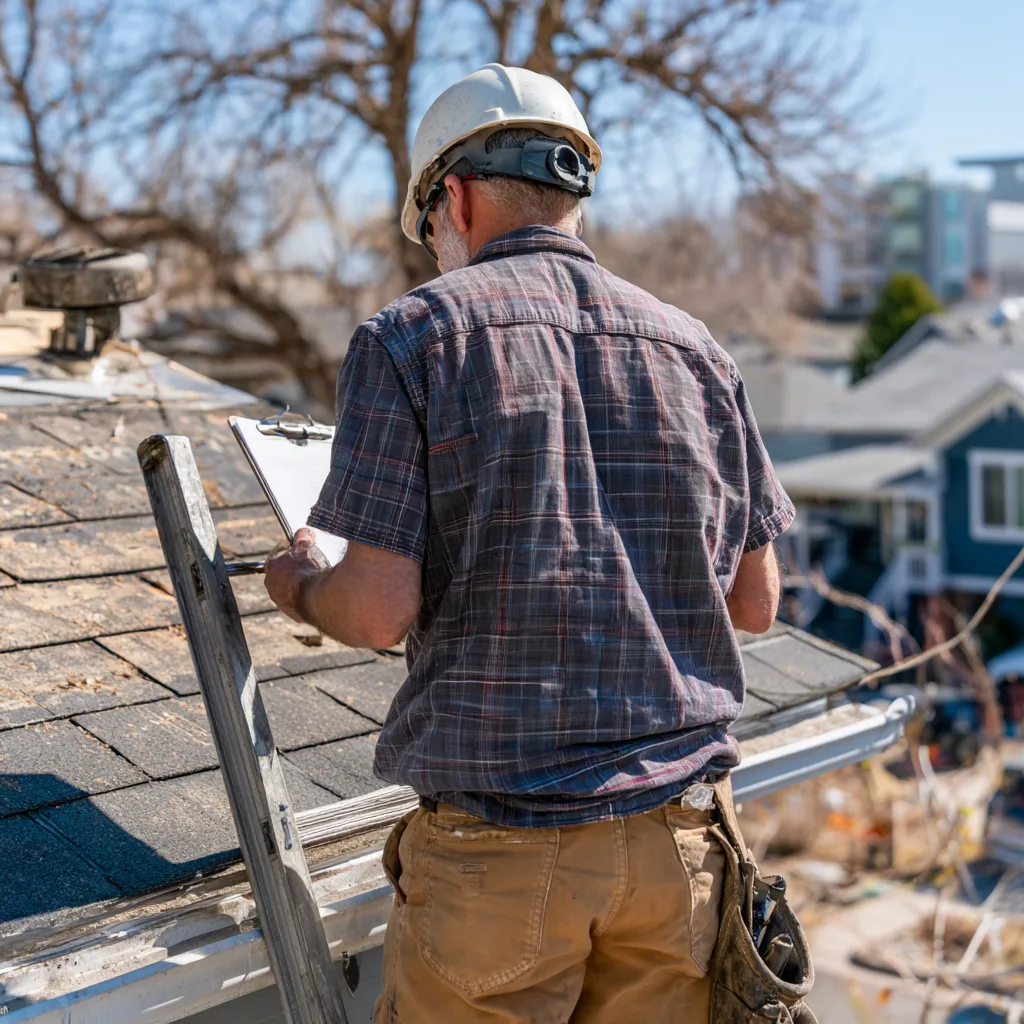
The other part of the question is the roof’s actual condition. Our roofer can inspect it and explain the work it needs. Replacement is a roofing decision; whether and how an insurer contributes is a policy decision.
Get the roof and the policy questions into focus
Tell us the roof age if you know it, and what has changed. A free inspection can help establish the roofing work to discuss while your agent explains the policy terms.
Age, valuation and the paperwork
Does a Texas policy stop covering a roof at a certain age?
There is no universal cutoff for all policies. An insurer can change valuation or eligibility based on age and condition, and an endorsement may limit roof payment. Read the current terms and ask your agent about your roof.
What is recoverable depreciation?
It is an amount withheld from an initial payment that may become payable under replacement-cost coverage after policy conditions are met. Ask the insurer about the deadline, work and proof required; it is not part of every settlement.
Can a roofer tell me what my claim will pay?
A roofer can assess the roof and price the work. The insurer determines coverage and payment under the policy. A roof estimate cannot guarantee claim approval or the amount paid.
The roof came with the house. How do I find its age?
Look for the previous owner’s reroofing invoice, seller disclosure and available permit records. Ask which work a record actually covers. If the date cannot be established, describe it as unknown rather than use the house’s age.